
Camp Life & Living History for Re-enactment
Away from the field, a show weekend is lived around the fire, and this is the kit for those hours.
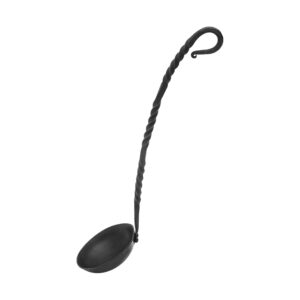
For cooking over the fire there are a hand-forged iron tripod, a 21 cm iron cauldron kettle and a 35 cm iron ladle.
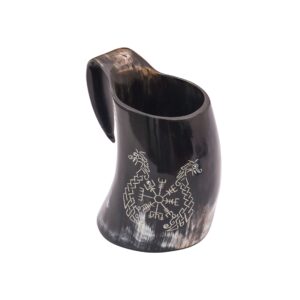
For drinking at the table there are ox horn tankards, cups and drinking horns, with leather belt holsters, carry bags, and wooden or iron stands so the horns don't tip.
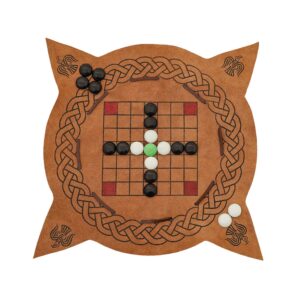
For evenings around camp there are a leather hnefatafl board with glass pieces, hand-carved ox bone dice, a rune set, and bronze coins for a merchant's table.
There are also horn and bone combs, acacia pipes, iron thread snips for mending, and an ash wood folding chair that collapses flat when you loosen its wooden screws.
Everything is made to be handled at living history displays, re-enactment encampments and LARP camps rather than kept behind glass.
Each material wants its own care. Scour iron cookware, dry it and oil it after the meal. Wash horn by hand in cool or lukewarm water, keep it away from boiling drinks, and dress it with beeswax. Keep wood dry and feed it a little oil. The care and maintenance page sets this out by material.
Can I drink from the horn tankards and cups?
Yes, for cold drinks. The product pages describe the horn as sealed or given a drink-safe finish inside, and they quote capacities of roughly 100 ml for the set of three cups, 400–500 ml for the crimson tankard, and 500–600 ml for the engraved tankards. Keep hot drinks, boiling water and dishwashers away from all of them, because heat warps and splits horn.
How do I look after horn, bone and wood?
Wash horn and bone by hand in cool or lukewarm water with mild soap, dry them straight away, and never leave them to soak. Rub in a little beeswax or food-safe oil from time to time so the horn doesn't dry and crack. Keep wooden pieces dry, out of strong sun, and away from water. The guksi cup is left unpolished and takes the occasional dressing of food-safe oil. See the care and maintenance page for the full routine.
Will the iron cookware rust?
Bare iron rusts if it's put away damp. After cooking, knock off the soot and ash, scour and dry the piece, give it a thin coat of oil, and pack it somewhere dry. The tripod, kettle and ladle are all forged iron and made to go over a wood fire.
What does a first camp kit need?
Start with what you'll use every day. That means something to drink from, such as a horn tankard with a belt holster or the acacia guksi on its leather cord, and if you cook, a way to hang a pot, which is the tripod and kettle. Add a seat and a game for the evenings after that.
How do the drinking horn stands differ?
The wooden stand and the two forged iron stands all hold a horn upright on the table. The iron ones are blackened. One iron stand is sold for display only and shouldn't be carried with a full horn in it. None of the stands' pages give dimensions, so check your horn's size against the photos.